
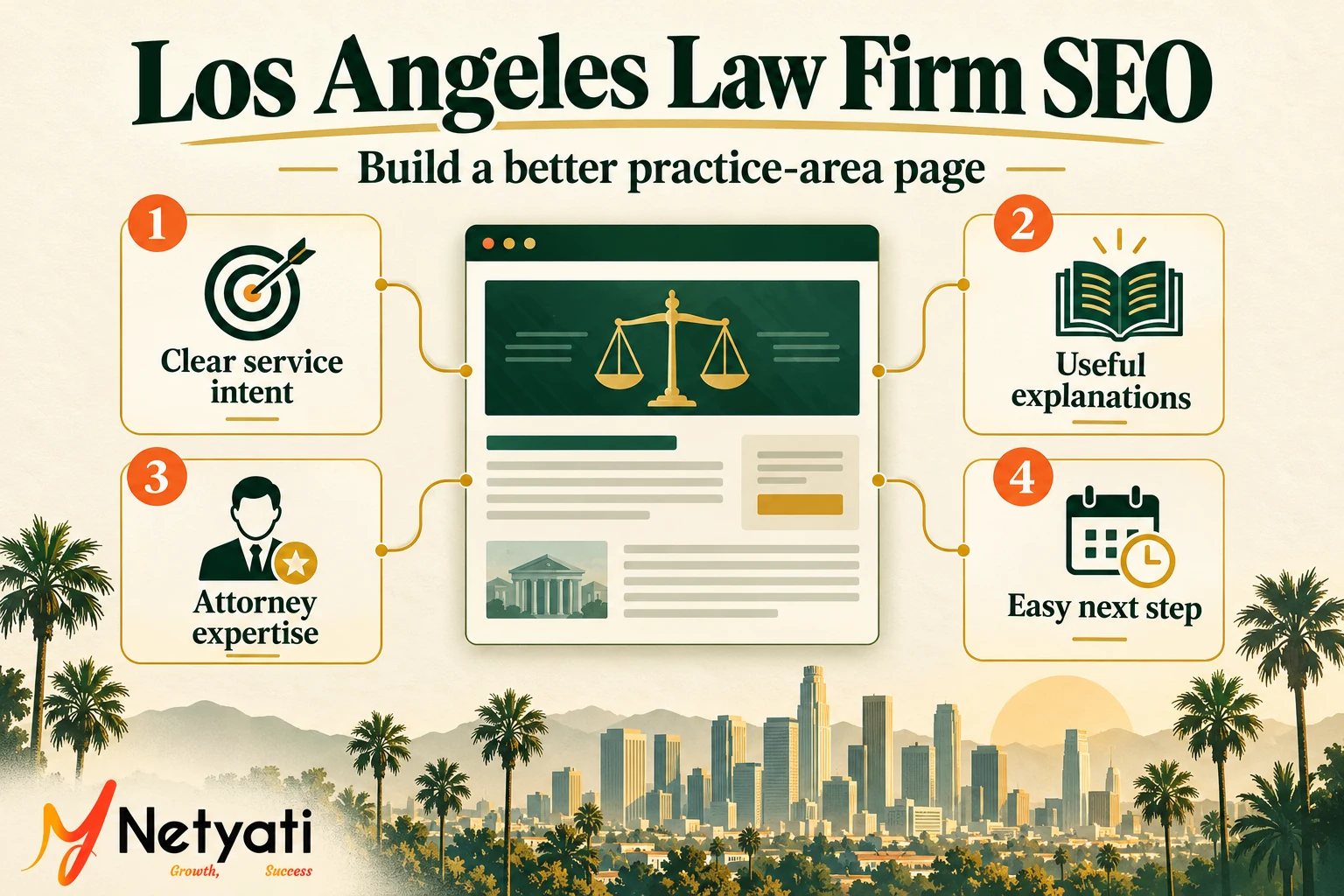
For Los Angeles law firm SEO, a practice-area page needs a clear job: explain the work a firm handles and help a suitable prospective client decide what to do next. An article answering a broad legal question serves a different purpose. Mixing both jobs into an unfocused page can leave readers unsure whether they have found information or a service.
Start with the firm’s actual priorities, not a list of keyword variations. Our Los Angeles local search strategy describes how practice-area depth fits into the wider campaign. The page plan below focuses on the decision a reader needs to make after arriving.
Assign one main service intent to the page
Write a one-sentence brief before changing the copy: this page helps a particular audience understand a particular service in a market the firm genuinely serves. List the questions someone needs answered before contacting the firm. Typical questions concern the work handled, attorney availability, consultation process and documents to prepare, without making assumptions about legal eligibility.
Compare the proposed page with existing URLs. If two pages describe the same service to the same reader, decide which should be the primary destination before expanding both. A separate page is useful when it addresses a distinct service or intent, rather than replacing one city name or keyword with another.
Explain the service before discussing the firm
Open with a plain-language explanation of what the page covers. Readers should not have to work through several paragraphs about commitment and excellence before discovering whether the firm handles their issue. Follow that explanation with the situations the firm can discuss and how an initial conversation works.
Keep legal statements within the firm’s review process. Marketing staff can organize the page and improve readability, but the responsible attorney should check substantive explanations, qualifications and claims. A useful service page does not need unsupported outcome promises, copied legal definitions or a word-count target.
Make the attorney behind the work visible
Show who handles the practice area and connect the page to an accurate biography. Relevant experience, professional background and a clear description of responsibility help readers evaluate the firm. Use facts the firm can support rather than broad superlatives.
Give the page an owner and a review date in the editorial workflow. If services, attorneys or consultation arrangements change, update the affected sections together. This is easier to maintain than adding a generic author label that does not tell readers who stands behind the information.
Use supporting articles to answer deeper questions
Some questions need more explanation than a service page can comfortably provide. Create a resource only when it answers a distinct reader need, then link it naturally to the relevant practice area. The service page can point back to genuinely useful guides.
Our law firm content strategy guide explains that relationship. For example, a broad practice page might summarize a topic and link to a detailed checklist, while the checklist points readers to the service when professional help is the appropriate next step. Avoid adding the same exact-match anchor to every paragraph.
Check the local details and mobile contact route
State the areas served accurately. Distinguish a staffed office from a market the firm serves remotely or through other arrangements. Location details should agree with the firm’s contact information and business profile. Our Google Business Profile checklist provides a companion review for those public details.
On a phone, test whether a reader can identify the firm, understand the service and use the intended contact option. Avoid large decorative sections that push useful information too far down. Keep phone links, forms and consultation instructions consistent with how the intake team actually works.
Review usefulness before adding more pages
Choose a small set of pages to improve first. Record the current questions covered, missing information, supporting resources and intended next step. After updates, review relevant search visibility and enquiry quality rather than assuming a longer page must perform better.
Netyati’s law firm SEO services connect practice-area architecture with local relevance and measurement. Google’s helpful content guidance is a useful reference for evaluating whether a page serves readers. The objective is a clearer service page that earns its place in the website.