
Law firm AI search visibility is easier to discuss when the report answers a specific question: which pages are appearing, and are those pages useful to the clients the firm wants to reach? For a Los Angeles or Pasadena practice, a screenshot of one AI answer is a starting observation. It is not a reliable measure of sustained visibility or new business.
Google introduced dedicated generative AI performance reports in Search Console in June 2026 and confirmed a worldwide rollout by August 31. The reports provide a more structured way to review appearances in AI features. Use them alongside the rest of your reporting, rather than treating an appearance as a completed enquiry.
This scorecard supports a broader strategy for Los Angeles and Pasadena law firm SEO services. It keeps informational visibility connected to service pages and the next steps that prospective clients can actually take.
Start with what the AI report actually measures
Google’s Generative AI performance report documentation describes impression data for AI Overviews and AI Mode. Available dimensions include pages, countries, devices and dates. A report may be absent when a site has not received enough impressions. Do not treat a missing report as proof of a penalty.
An impression means a link was shown under the report’s counting rules. It does not establish that a person visited, called or became a client. Keep those outcomes in separate columns. Also avoid adding AI impressions to overall Search totals as though they were entirely separate audiences: Google says the AI data is included in overall performance reporting.
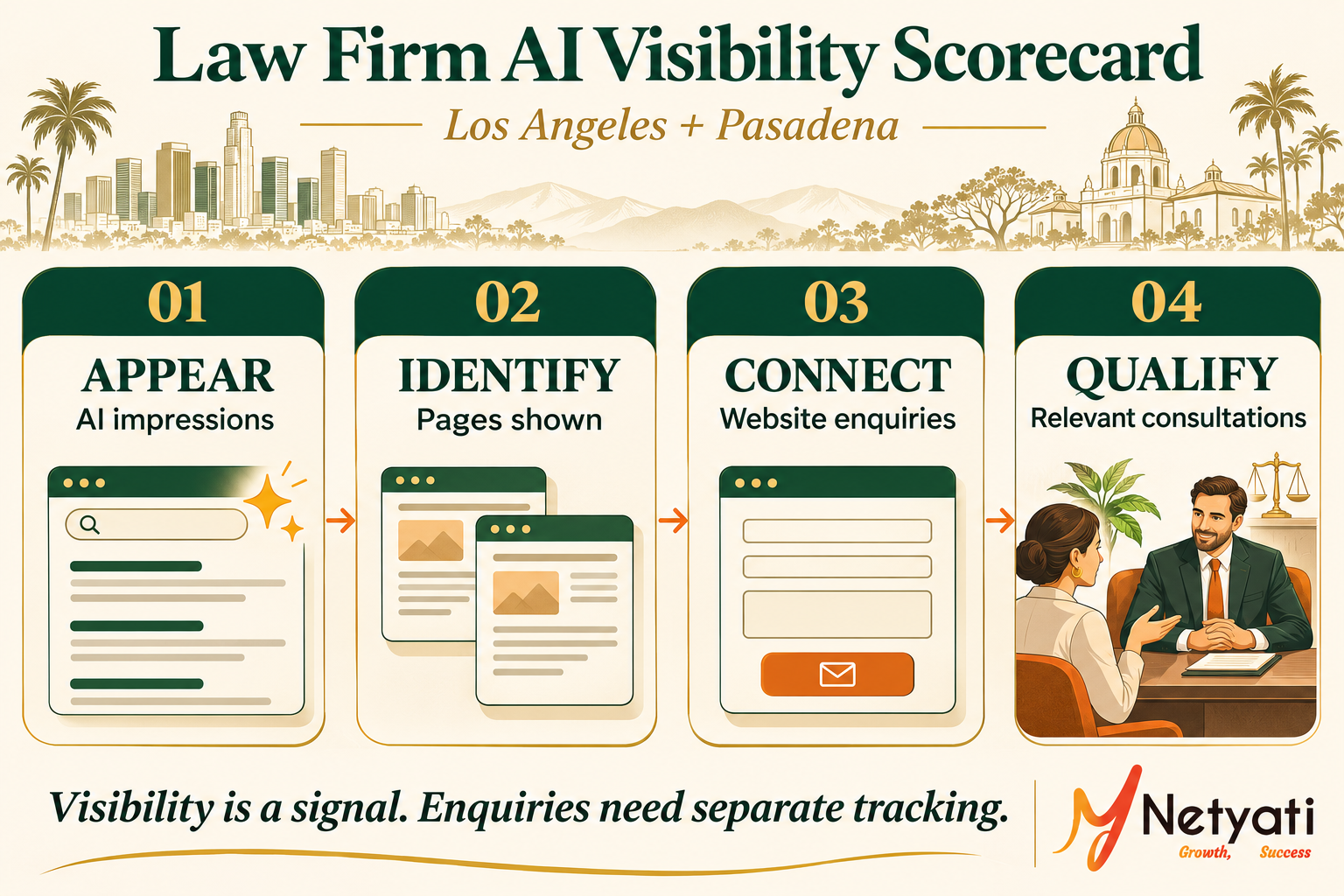
Build a four-part law firm AI visibility scorecard
1. Appear: record the visibility trend
Choose a consistent review period, such as the last complete 28 days compared with the preceding 28 days. Record the dates, country filter and device selection with the export. This is a suggested reporting routine, not a Google requirement. A consistent comparison is more useful than switching windows whenever the chart looks better.
2. Identify: inspect the pages being shown
Group the visible URLs by purpose: service pages, attorney biographies and informational articles. Then ask whether the pages reflect the firm’s actual work. If an old article appears while the relevant service page is unclear, the next task may be editorial improvement rather than publishing more articles.
Give each useful article a relevant next step. Our law firm content strategy guide explains the relationship between helpful articles and practice pages. A link should help the reader continue the same task, not interrupt the article with an unrelated sales pitch.
3. Connect: review website enquiries separately
Use your existing website analytics and intake records to review completed contact actions. Distinguish a successful form submission from a button click. Test that the form reaches the intended team and that mobile visitors can use the contact options. A higher visibility count is less useful if the enquiry journey fails.
Do not label every organic enquiry as AI-generated. When a reliable source is unavailable, keep the source unknown. An optional “How did you hear about us?” question can add context, but a client’s recollection is not the same as a verified attribution trail. Report those observations separately.
4. Qualify: assess relevance with the intake team
Agree on a simple definition of a relevant enquiry before reviewing results. For example, the intake team could classify whether the requested service and geography fit the firm’s stated scope. Use aggregate counts in the marketing report. The SEO team does not need confidential case narratives to understand whether the website attracts appropriate enquiries.
Keep Los Angeles and Pasadena interpretation honest
The AI report’s country dimension does not establish city-level demand. A United States impression is not proof that the searcher was in Pasadena. Review the actual page content and the geographic information voluntarily supplied through your normal intake process before drawing a local conclusion.
A firm can maintain separate page groups for its real Los Angeles and Pasadena services while acknowledging this limitation. Avoid building duplicate city articles merely to populate a report. Our Los Angeles local search strategy provides the broader foundation for useful location signals.
Turn the scorecard into one clear next action
If relevant pages are appearing but enquiries remain flat, inspect the page and contact journey before attributing the problem to rankings. If only tangential articles appear, review how your content connects to your real services. If visibility changes after a site update, add that update to your reporting notes and investigate before claiming causation.
Pick one improvement, name its owner and record the date. Possible tasks include clarifying a service explanation, updating an outdated article or fixing a broken contact step. Keep the next review focused on what changed and what remains uncertain. That creates a useful working record rather than a monthly collection of screenshots.
Measure progress without promising a ranking
AI visibility is one part of search performance. It cannot guarantee page-one rankings, consultations or signed clients. Netyati can help turn reporting into a practical content and website plan; talk to us about your firm’s search priorities and the pages you want to improve.
Editorial note: reviewed November 4, 2026 against the linked Google announcement and report documentation. Reporting features and availability can change.